For years, pharmacologic targeting of aldosterone has largely meant blocking its action at the mineralocorticoid receptor.
Now, aldosterone synthesis itself has become a therapeutic target.
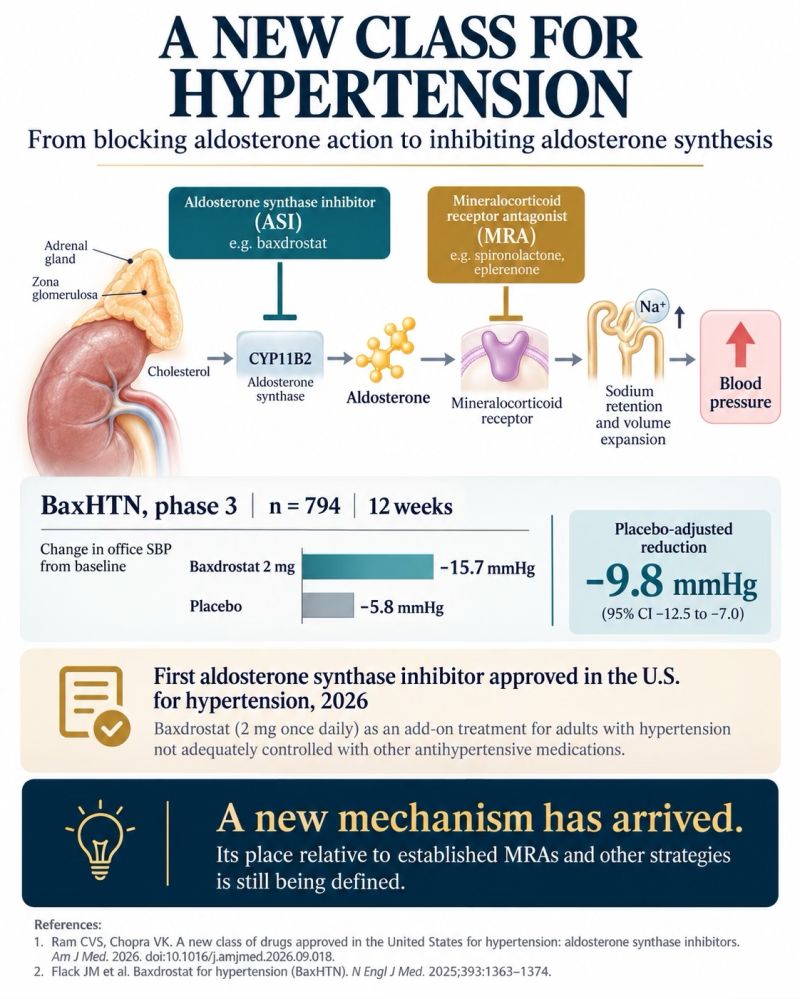
In a timely article published in The American Journal of Medicine, Ram and Chopra discuss the arrival of aldosterone synthase inhibitors following the U.S. approval of baxdrostat — the first drug of this class approved for hypertension.
The pivotal phase 3 BaxHTN trial provides the key clinical signal:
→ 794 patients with uncontrolled or resistant hypertension
→ baxdrostat added to background antihypertensive therapy
→ at 12 weeks, office SBP decreased by 15.7 mmHg with baxdrostat 2 mg vs 5.8 mmHg with placebo
→ placebo-adjusted difference: −9.8 mmHg
The mechanism is particularly compelling:
selective inhibition of CYP11B2 reduces aldosterone synthesis upstream, rather than blocking the mineralocorticoid receptor downstream.
But an important question remains:
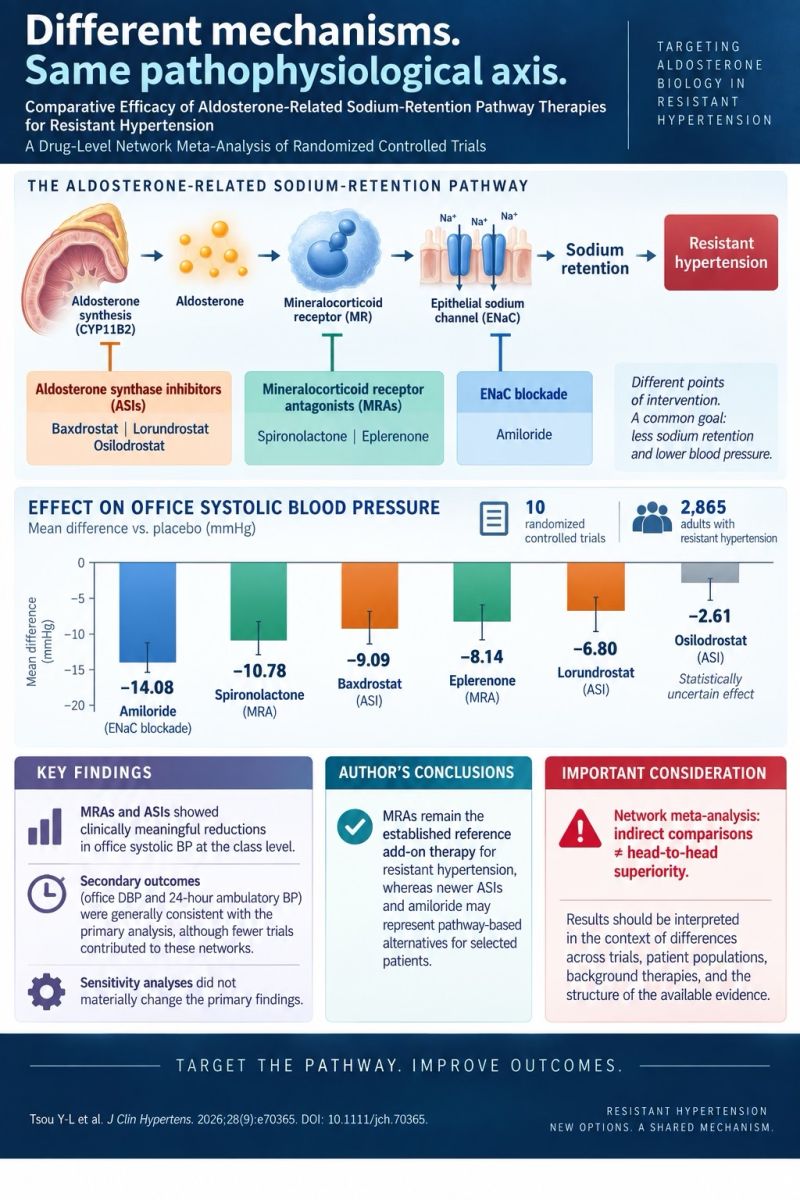
Where will aldosterone synthase inhibition ultimately fit relative to established MRAs, renal denervation, and other emerging strategies for difficult-to-control hypertension?
A new class has arrived. Its precise place in the treatment algorithm is now the next question.
- Ram CVS, Chopra VK. Am J Med. Online September 26, 2026. doi:10.1016/j.amjmed.2026.09.018
- Flack JM, et al. N Engl J Med. 2025;393:1363–1374.