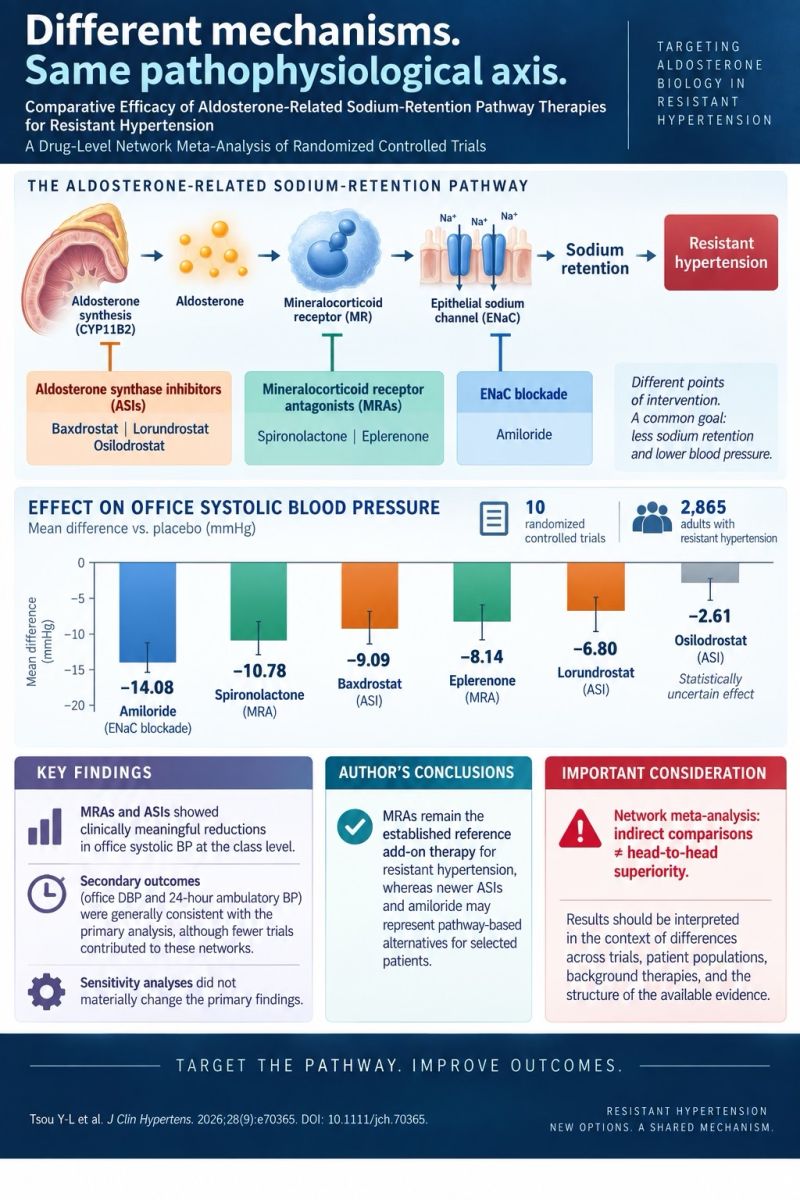
A new drug-level network meta-analysis including 10 RCTs and 2,865 patients provides an interesting perspective on therapies targeting the aldosterone-related sodium-retention pathway.
Compared with placebo, office systolic BP was reduced by:
Amiloride: −14.08 mmHg
Spironolactone: −10.78 mmHg
Baxdrostat: −9.09 mmHg
Eplerenone: −8.14 mmHg
Lorundrostat: −6.80 mmHg
But the key message is not the ranking of drugs. These are network estimates, not head-to-head comparisons.
The real message is the pathway:
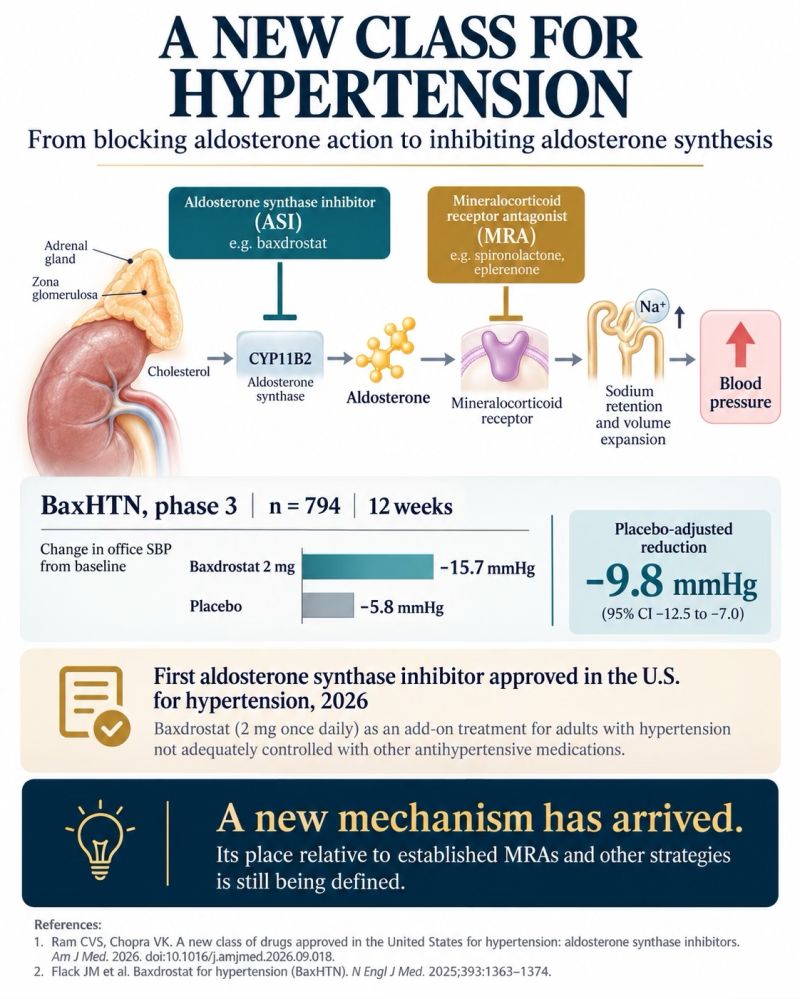
Aldosterone synthesis → Mineralocorticoid receptor → ENaC → Sodium retention
Different therapies intervene at different points, but share a common therapeutic goal.
MRAs remain the established reference add-on therapy, while aldosterone synthase inhibitors and amiloride are expanding the possibilities for pathway-directed treatment.
Perhaps the question in resistant hypertension is evolving from “Which fourth drug should we add?” to “Which component of aldosterone-driven sodium retention should we target?”
Different mechanisms. Same pathophysiological axis.
- Tsou Y-L et al. J Clin Hypertens. 2026;28:e70365.