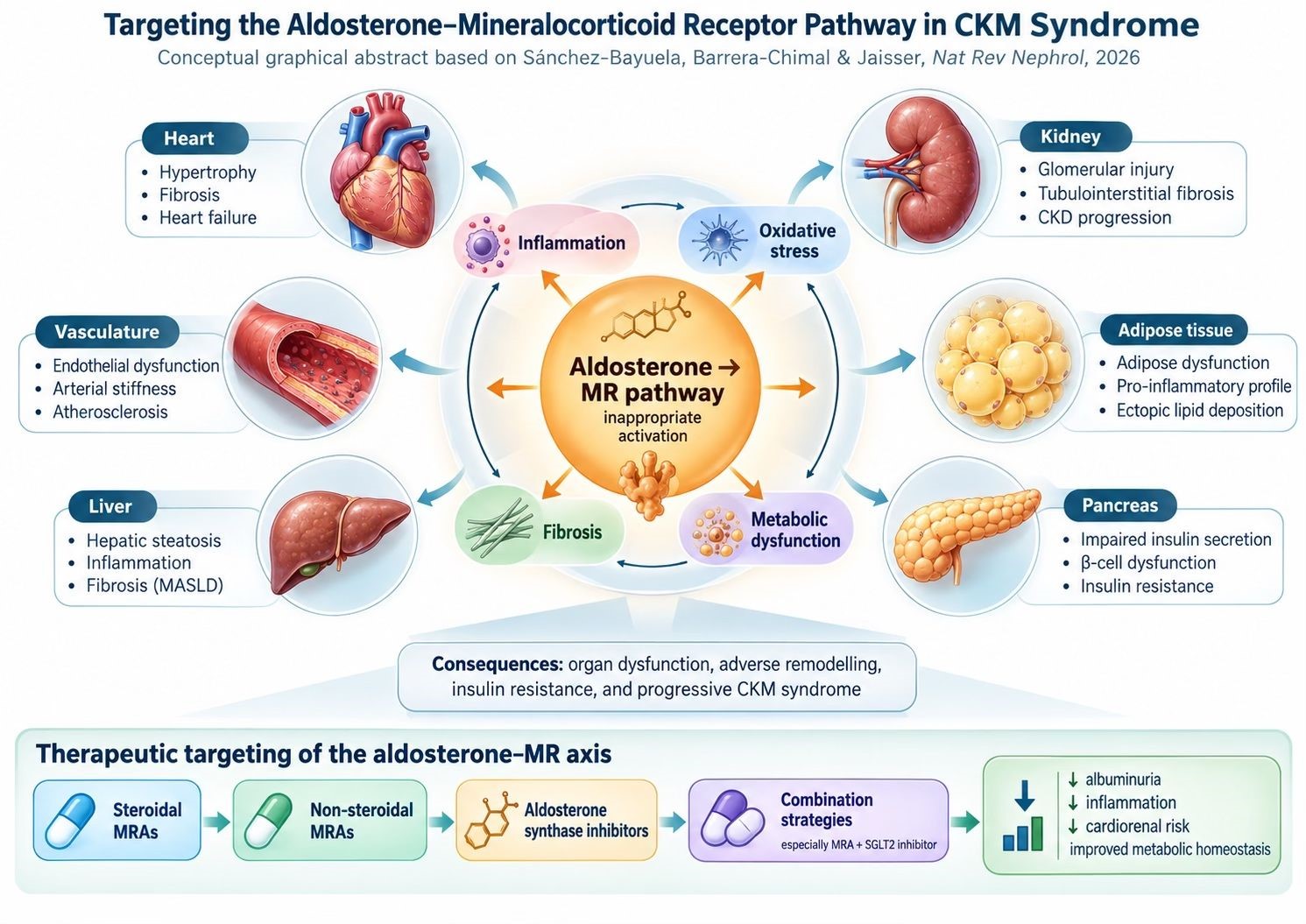
A timely Review in Nature Reviews Nephrology places the aldosterone–mineralocorticoid receptor (MR) axis at the center of the cardiovascular–kidney–metabolic (CKM) continuum.
The concept is compelling: inappropriate MR activation may provide a common biological link between seemingly different manifestations of CKM disease.
Heart.
Vasculature.
Kidney.
Adipose tissue.
Liver.
Pancreas.
Across these organs, excessive aldosterone–MR signaling converges on remarkably similar pathways:
→ chronic inflammation
→ oxidative stress
→ fibrosis
→ adverse tissue remodeling
→ metabolic dysfunction
And this increasingly has therapeutic consequences.
We have moved from conventional RAAS blockade and steroidal MR antagonists toward non-steroidal MRAs, while aldosterone synthase inhibitors now offer the possibility of intervening even further upstream.
Perhaps even more interesting is the emerging concept of complementary pathway inhibition — including MR antagonism together with SGLT2 inhibition — rather than treating cardiovascular, renal and metabolic disease as separate entities.
This Review reinforces an important shift in perspective:
CKM syndrome may require us to think less in terms of individual organs and more in terms of shared biological pathways.
And the aldosterone–MR axis increasingly looks like one of those pathways.
- Sánchez-Bayuela T, Barrera-Chimal J, Jaisser F. Targeting the aldosterone–mineralocorticoid receptor pathway in cardiovascular–kidney–metabolic syndrome. Nature Reviews Nephrology. Published September 28, 2026.