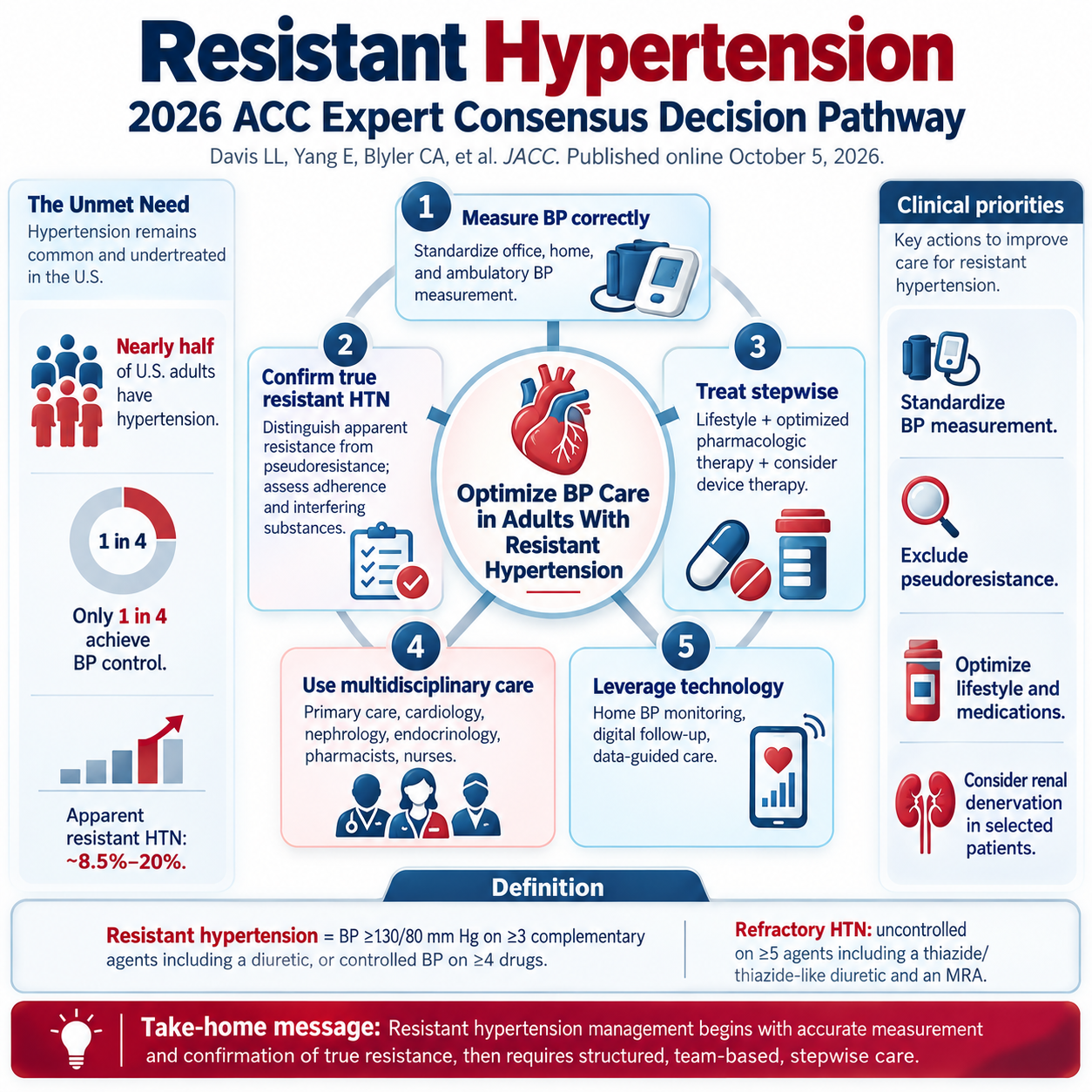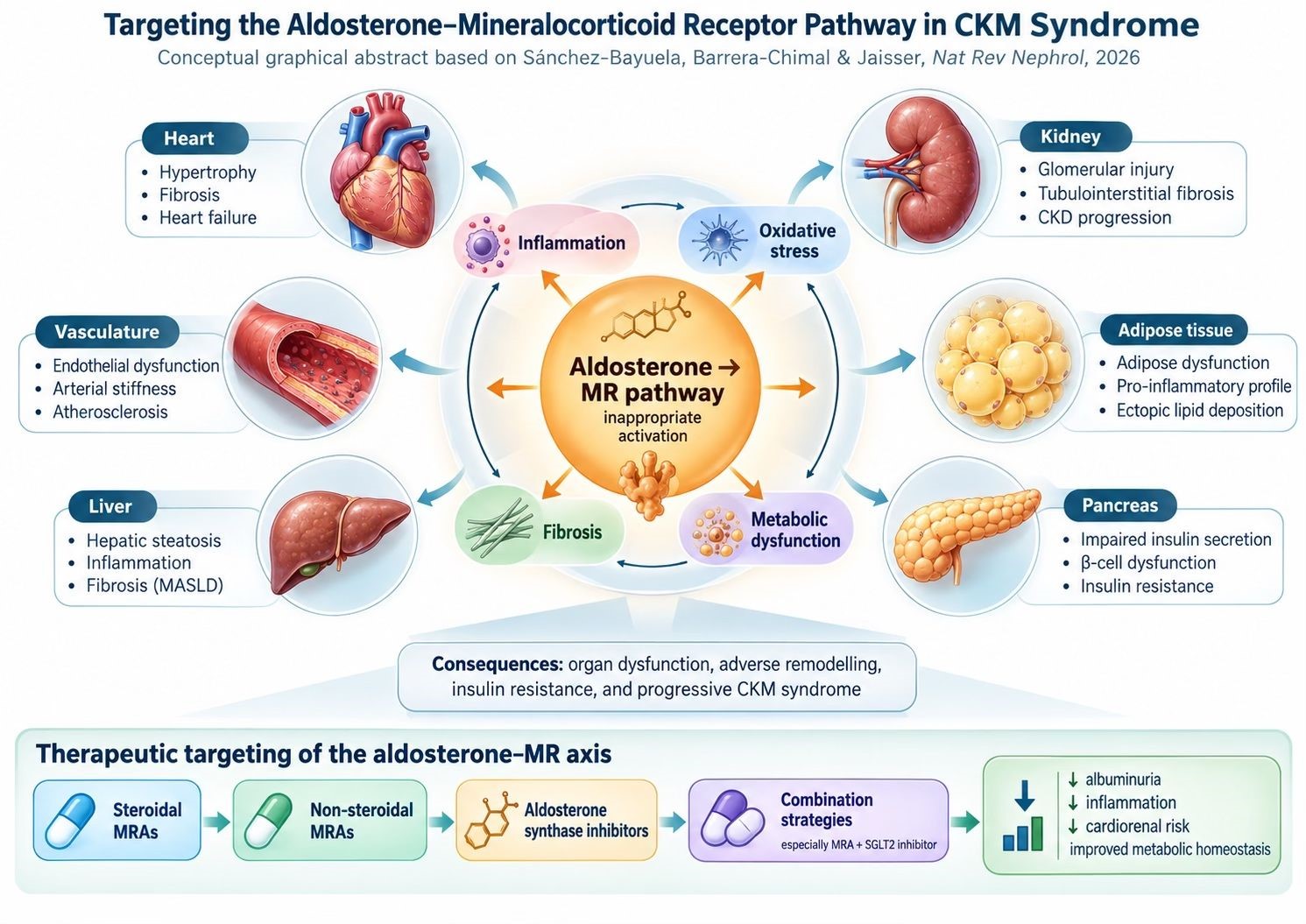
A new network meta-analysis published in JACC: Advances provides important evidence — and a reminder to interpret comparative effectiveness carefully.
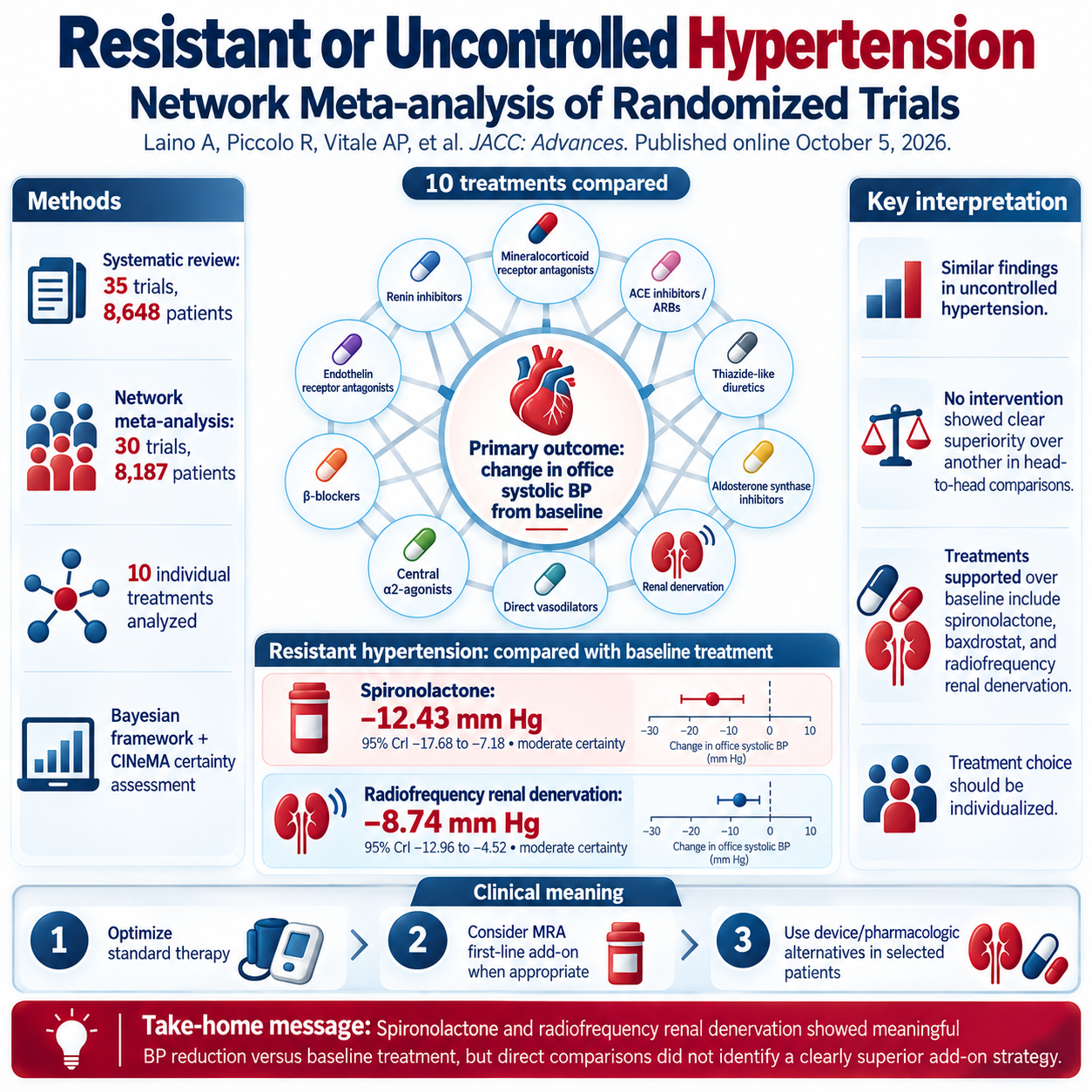
Laino and colleagues evaluated 35 randomized trials involving 8,648 patients. The network meta-analysis included 30 trials and 8,187 patients.
In resistant hypertension, reductions in office systolic BP compared with baseline treatment included:
- Spironolactone: −12.43 mmHg (95% CrI −17.68 to −7.18)
- Radiofrequency renal denervation: −8.74 mmHg (95% CrI −12.96 to −4.52)
Both estimates were supported by moderate-certainty evidence.
Importantly, no intervention demonstrated clear superiority over another in the comparative network.
This distinction matters: differences between point estimates should not be interpreted as proof that one treatment is superior to another.
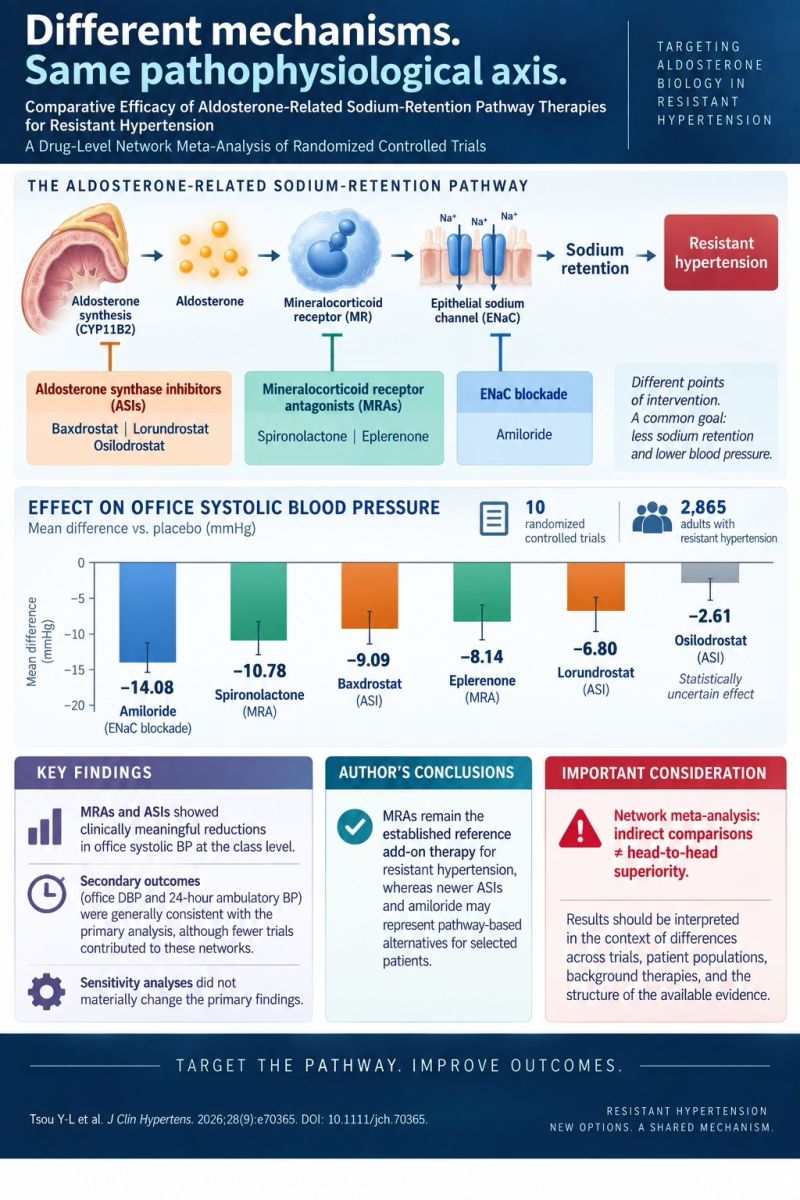
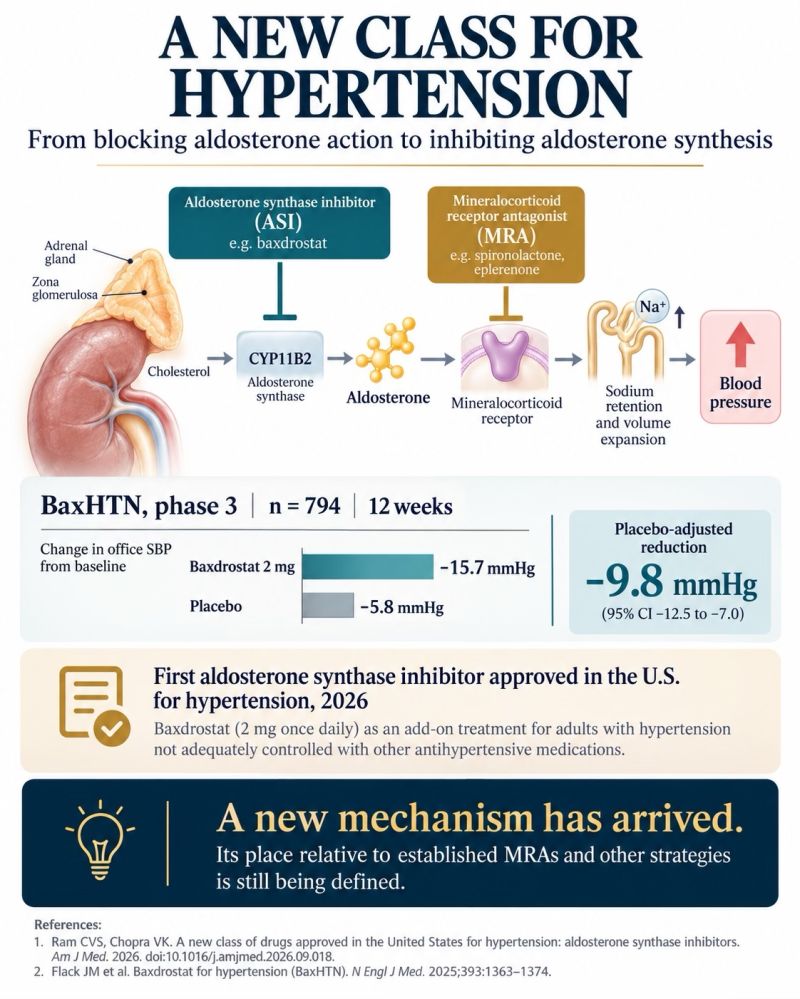
My take-home message: Spironolactone remains a fundamental therapeutic option, while renal denervation and aldosterone synthase inhibition expand our treatment possibilities.
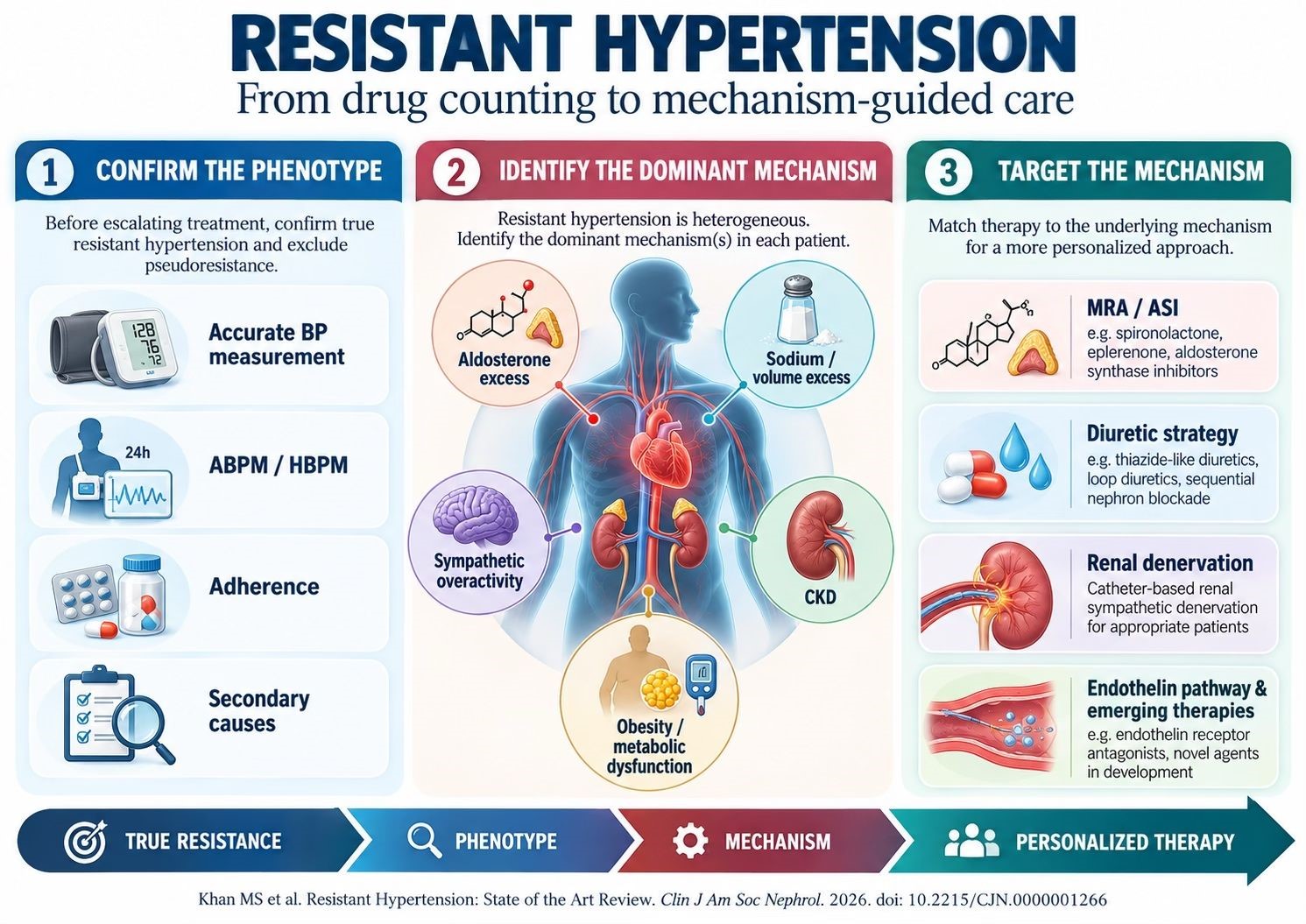
The next challenge is determining which patient benefits most from each strategy — and whether BP reduction translates into improved cardiovascular outcomes.
- Laino et al. JACC: Advances, 2026. https://doi.org/10.1016/j.jacadv.2026.103306