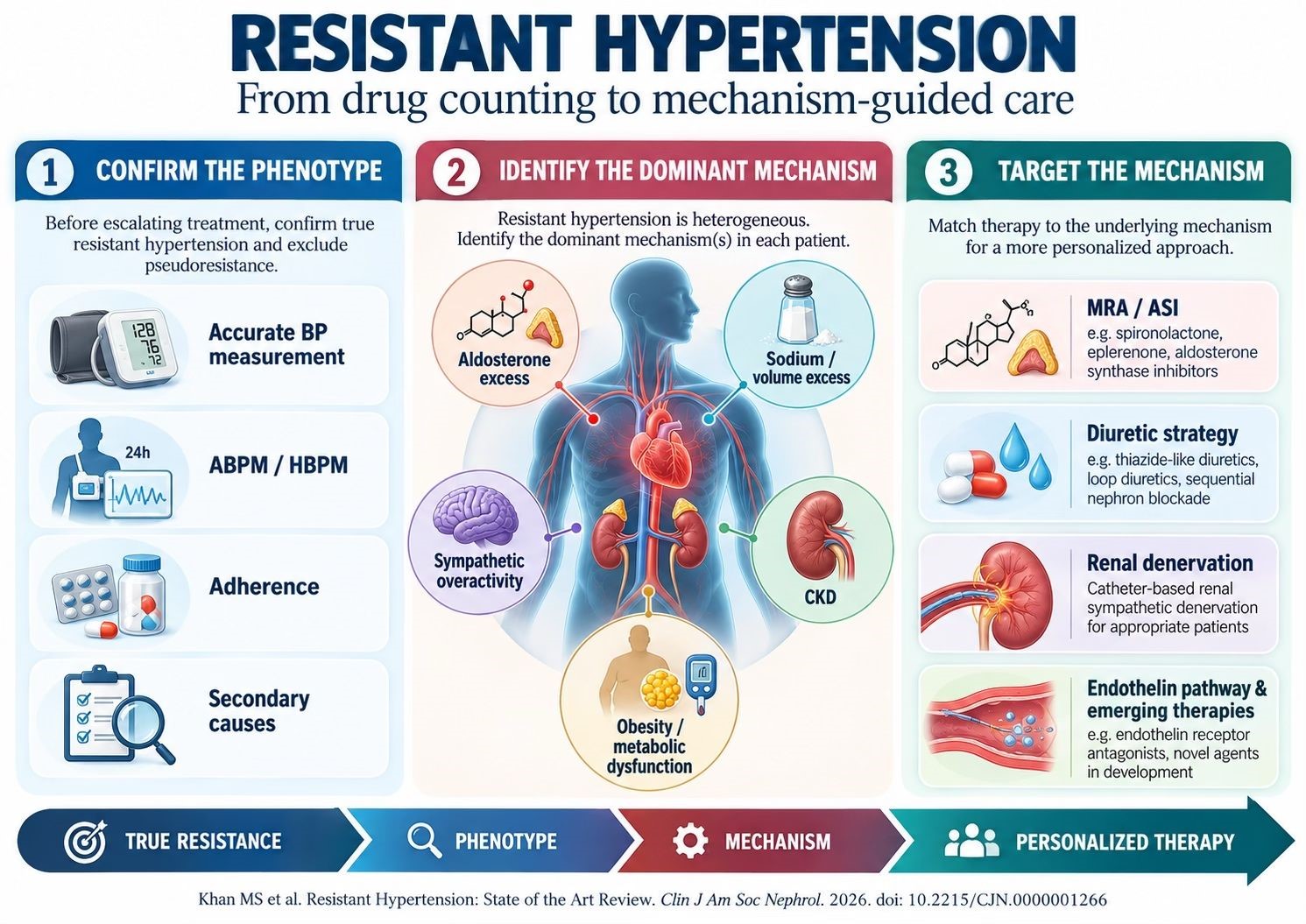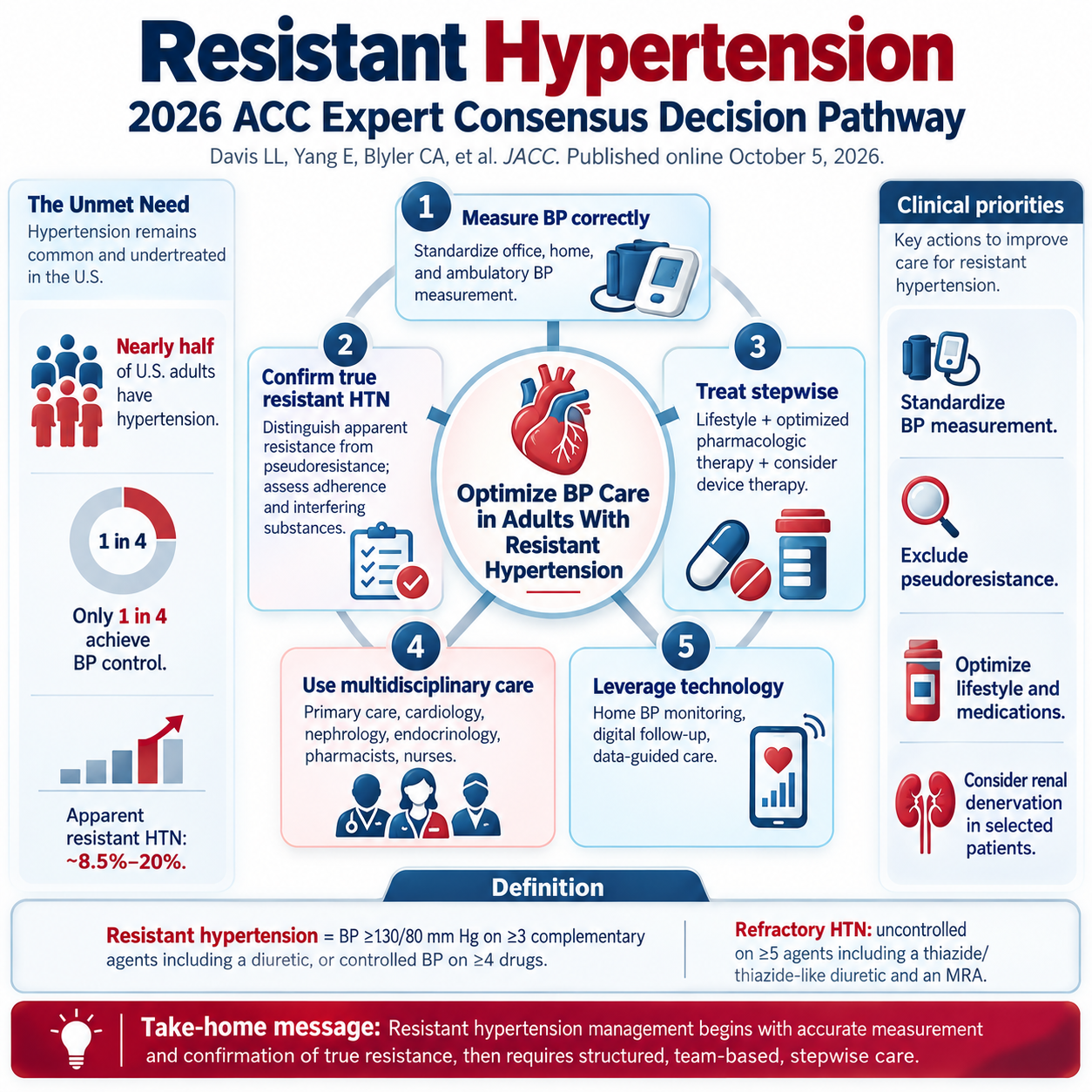
A timely State-of-the-Art Review by Khan and colleagues in CJASN provides a comprehensive look at how the management of resistant hypertension is evolving.
The first step remains fundamental:
Is this truly resistant hypertension?
Before escalating treatment, we need to exclude pseudoresistance:
→ inaccurate BP measurement
→ poor adherence
→ white-coat effect
→ suboptimal treatment
→ secondary causes
This is why ambulatory and home BP monitoring are not optional details. They are central to confirming the phenotype and can uncover high-risk patterns such as nocturnal hypertension and abnormal dipping.
But perhaps the most interesting message is what comes next.
Resistant hypertension is not a single biological entity.
Different patients may have different dominant mechanisms:
sodium and volume excess
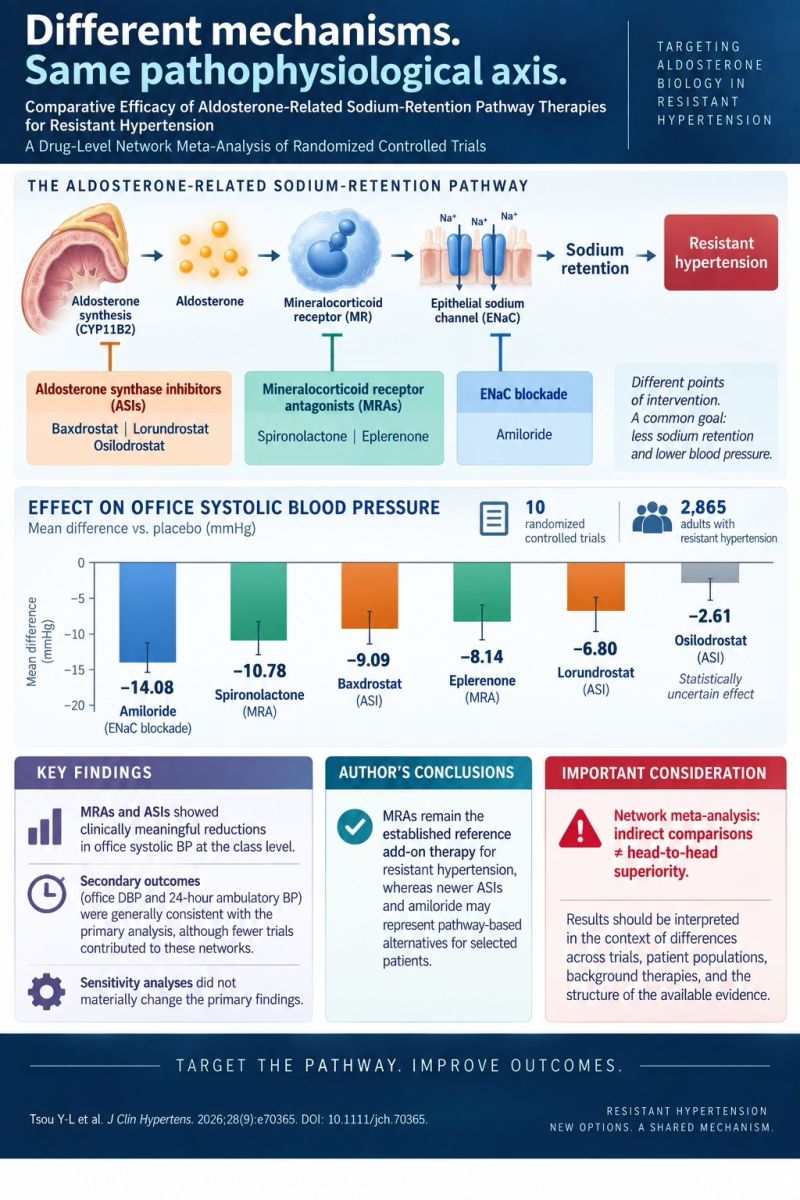
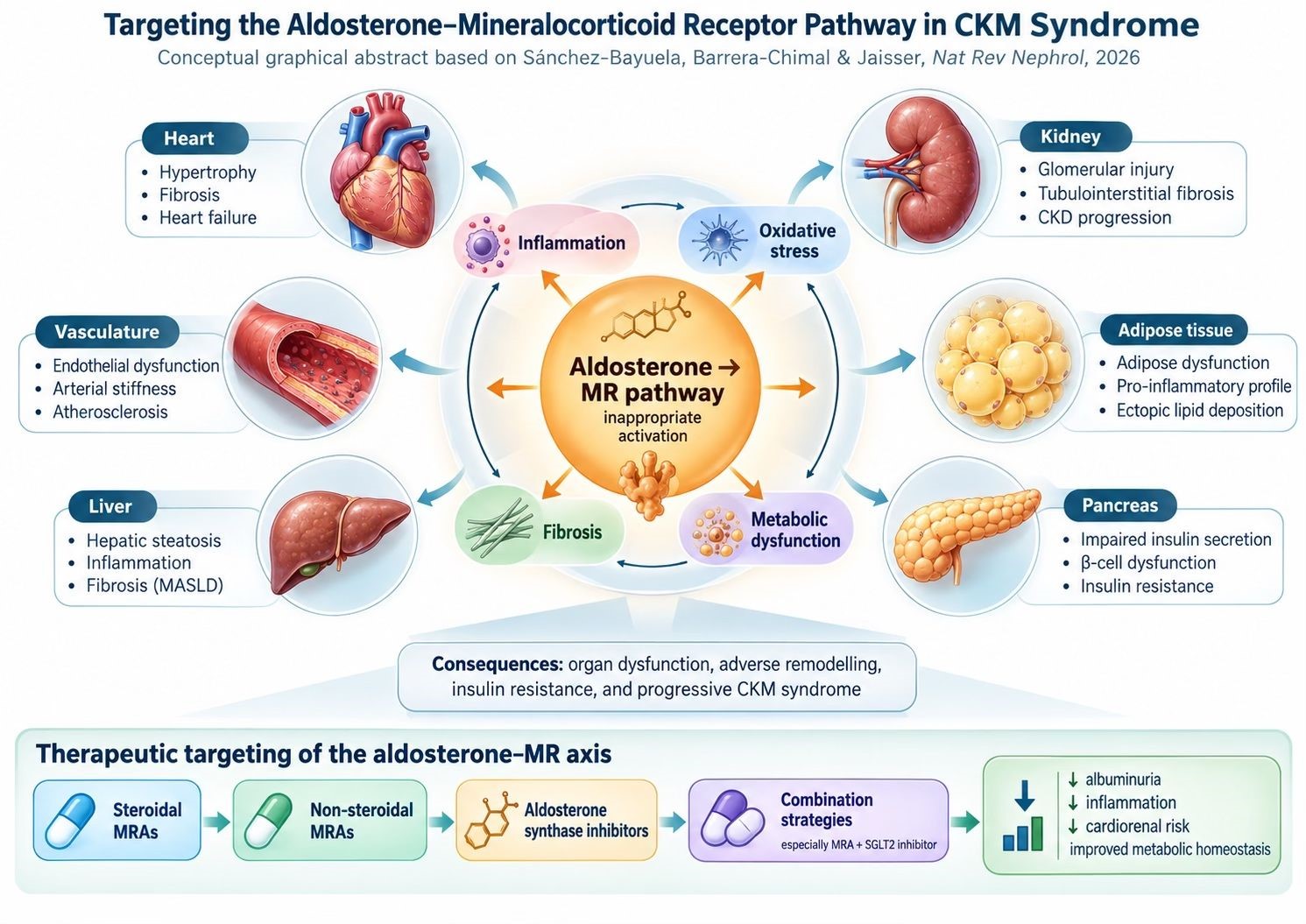
aldosterone excess
sympathetic overactivity
chronic kidney disease
Obesity and metabolic dysfunction
And treatment is becoming increasingly capable of targeting these mechanisms.
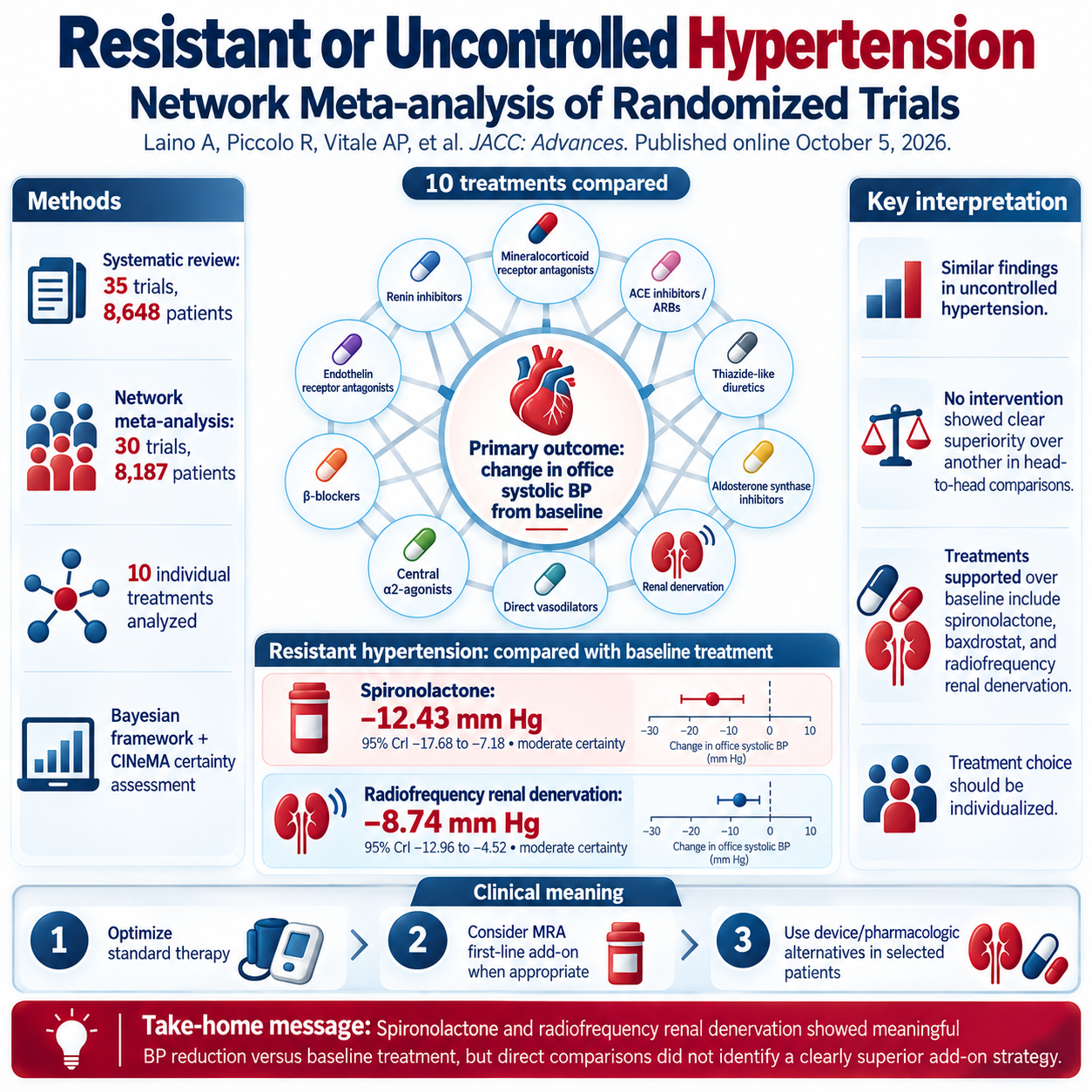
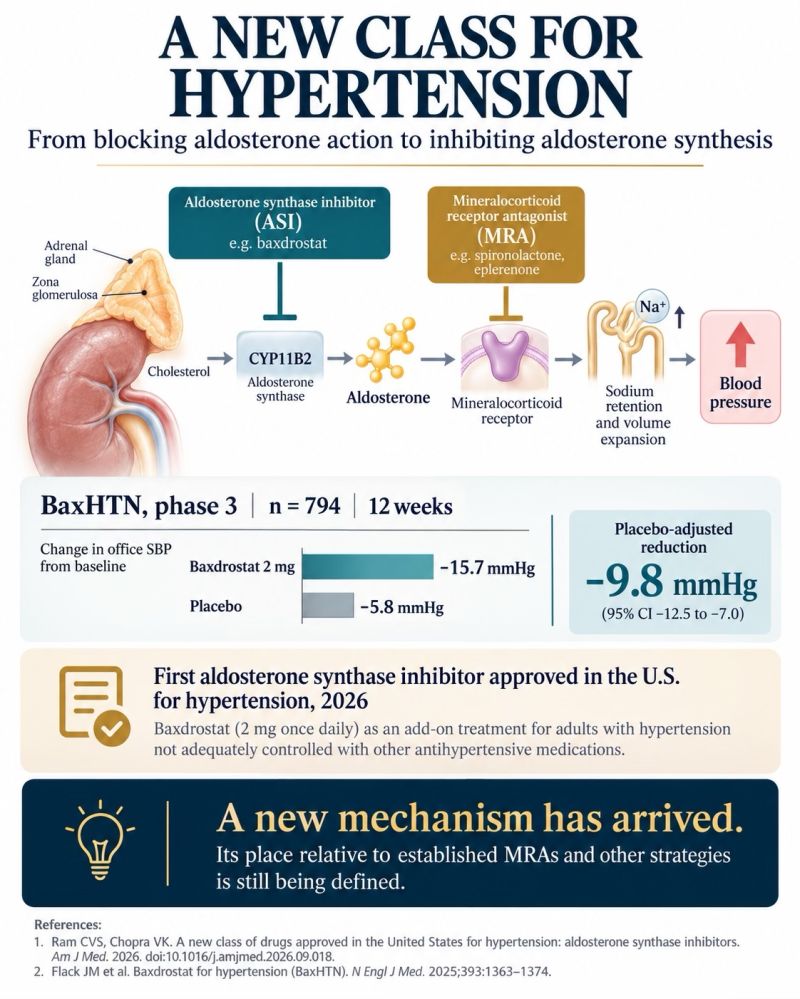
Beyond optimized triple therapy and mineralocorticoid receptor antagonists, the therapeutic landscape now includes:
- endothelin receptor antagonism
- aldosterone synthase inhibition
- renal denervation
- emerging RNA-based and neuromodulatory strategies
The future may therefore be less about asking:
“Which fifth drug should I add?”
and more about asking:
“What is driving hypertension in this patient?”
That transition—from drug-count–based care to phenotype- and mechanism-guided treatment—may be one of the most important changes occurring in resistant hypertension.
- Khan MS et al. Resistant Hypertension: State of the Art Review. Clinical Journal of the American Society of Nephrology. 2026. doi: 10.2215/CJN.0000001266 PMID: 42826060